
BRM
BRM Parawing: Brand Overview and What You Need to Know
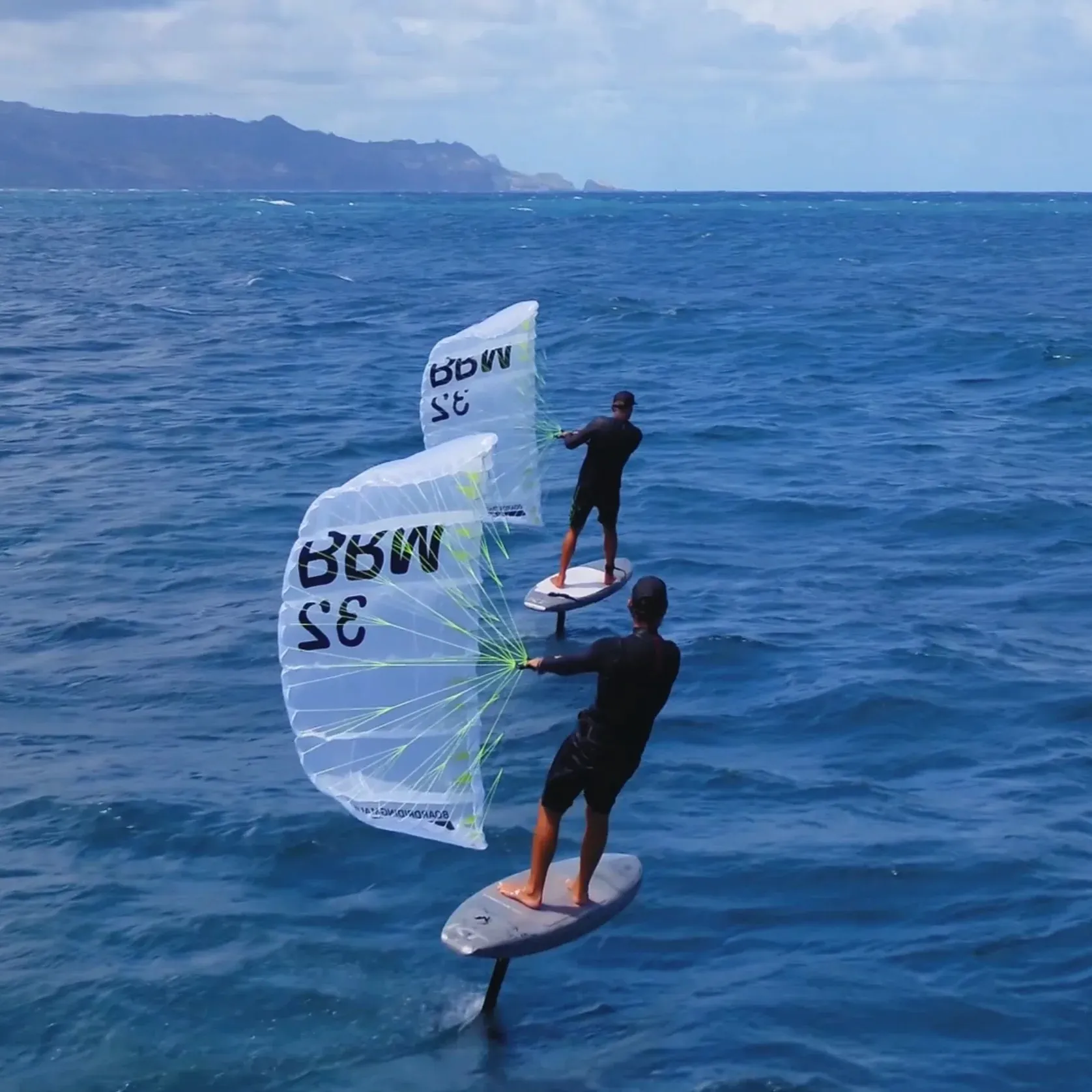
If there's one brand synonymous with parawingfoiling, it's BRM. Boardriding Maui didn't just enter this market early. They created it. Founded by Greg Drexler in Maui, Hawaii, BRM released the Maliko V1 in August 2024 and effectively launched parawingfoiling as a sport.
This page covers who BRM are, what their parawing range looks like, and whether they deserve the reputation they've built.
Who Are BRM?
BRM (Boardriding Maui) was founded by Greg Drexler in 2012, based in Maui, Hawaii. Drexler's background runs deep in water sports: he competed professionally in kiteboarding, placing 4th on the 2001 Kiteboarding World Tour, and worked as a designer at Naish International before going out on his own.
BRM's early work focused on lightweight, strutless kite designs optimised for foiling. By 2014, the company had pivoted almost entirely to hydrofoil-focused products. When Greg began experimenting with paraglider-style wings for foiling, the result was the Maliko V1: the first upwind-capable parawing designed specifically for hydrofoil riding.
The Maliko V1 launched in August 2024 and is widely credited as the wing that started it all. Within months, over a dozen competing parawing models entered the market from brands like Ozone, Gong, Duotone, and F-One. Greg Drexler is often referred to in the community as "Mr Parawing," and his direct involvement in the design and development of every BRM product is a core part of the brand's identity.
The BRM Parawing Range
BRM currently offers four parawing models, each named after a location on Maui. Three are single-skin designs and one is double-skin. All share BRM's ultra-compact carbon bar system and colour-coded line setup.
| Model | Construction | Sizes | Best For | Price (USD) |
|---|---|---|---|---|
| Kanaha | Single-skin | 2.5m–6.2m (6 sizes) | Upwind/downwind, all-rounder | $940–$1,080 |
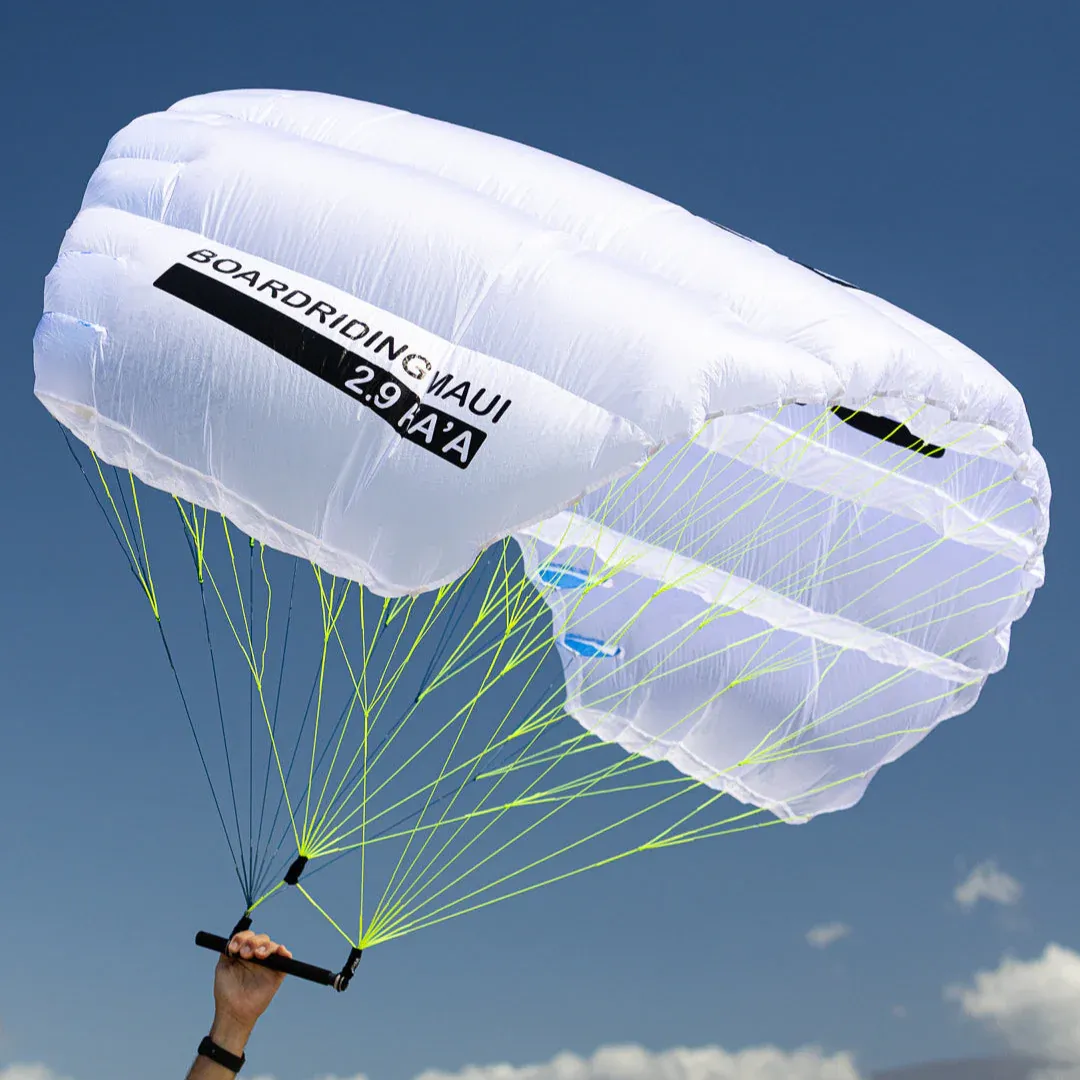
| Ka'a | Single-skin | 1.7m–6.0m (8 sizes) | Surf, quick stow/deploy | $890–$1,070 |
| Maliko 2 | Single-skin | 2.2m–5.3m (4 sizes) | Downwind, max power | $920–$1,040 |
| Paia | Double-skin | 3.1m–6.1m (5 sizes) | Range, comfort, depower | $1,360–$1,640 |
Each model serves a distinct riding style. The Kanaha is the most versatile and the closest to an all-round recommendation. The Ka'a suits riders who stow and deploy frequently. The Maliko 2 is purpose-built for single-run downwind sessions. The Paia is BRM's premium double-skin option, delivering the widest wind range and most composed feel in variable conditions.
Kanaha
Named after Kanaha Beach, the Kanaha is BRM's most versatile parawing. It has the highest upwind speed of the single-skin range, packs down smaller than almost any competitor, and covers six sizes from 2.5m to 6.2m. The Inertia named it the "Most Nimble and Packable Parawing" in their independent testing. For riders who want one BRM wing that does the most, the Kanaha is the starting point.
Ka'a
Named after Ka'a Point, the Ka'a is designed for rapid stow and deploy cycles. Its radically short lines make it the quickest to retract and relaunch, which suits wave-focused riders or anyone who wants the freedom to stow mid-session and paddle into waves before deploying again. It has the widest size range of any BRM model (eight sizes, from 1.7m to 6.0m).
Maliko 2
Named after the famous Maliko Gulch downwind run, the Maliko 2 is optimised for single-stow downwinding. You deploy at the start, ride downwind, and stow at the end. It uses slightly longer lines than the other single-skin models for greater power delivery, and it's available in four sizes from 2.2m to 5.3m. If your primary riding style is point-to-point downwind, this is the one.
Paia
Named after the town of Paia, the Paia is BRM's only double-skin parawing. The double-skin construction creates internal pressure for a more stable aerodynamic profile, which means a broader comfortable wind range, better depower, and a more composed feel in gusty conditions. It's heavier and more expensive than the single-skin models, but for riders who prioritise riding comfort and extended range over deployment speed, it's the premium choice in the BRM lineup.
Which Size?
If you're unsure which size to choose, use our parawing sizing guide to compare weight and wind ranges across brands.
Pros and Cons at a Glance
Pros
- The brand that created parawingfoiling, with genuine pioneering heritage
- Four distinct models covering every riding style
- Ultra-lightweight construction (a 4.0m Kanaha weighs just 464g)
- Exceptional packability: the most compact parawings on the market
- Direct relationship with founder/designer Greg Drexler
Cons
- Premium pricing across the range, especially the Paia
- Ships from Hawaii. Customs duties and shipping times for UK/EU buyers
- Limited European and UK dealer network compared to brands like Gong or Duotone
- BRM deliberately don't publish wind range numbers, which can make sizing harder for beginners
How Does BRM Compare?
BRM's heritage gives them a unique position in the market. They didn't enter parawingfoiling. They invented it. That history carries weight, and the accumulated refinement across multiple model iterations shows in the product.
Where BRM faces increasing competition is on price and accessibility. Brands like Gong offer single-skin parawings at roughly $700 to $950, compared to BRM's $890 to $1,080 for their single-skin models. The Paia double-skin sits in a different tier entirely at $1,360 to $1,640. For riders on a tighter budget, or those who want to buy locally in Europe, Gong or Duotone may be more practical starting points.
Where to Buy BRM Parawings
BRM sell direct from their own website at boardridingmaui.com, which ships internationally. For US buyers, delivery is typically 4 to 7 days with free shipping on parawings.
For buyers in the UK, Hydrofoil Store stocks BRM parawings and handles UK shipping. In Europe, HoeNalu carries BRM models with EUR pricing. US riders also have the option of purchasing through Big Winds or Wing Foil Pro Center.
International orders from BRM direct ship from Hawaii, so UK and EU buyers should factor in potential customs duties and longer delivery times. The European and UK dealer options can simplify this.
Frequently Asked Questions
Which BRM parawing should I start with?
For most riders, the Kanaha is the best starting point. It's BRM's most versatile model, works well for both upwind and downwind riding, and covers the widest practical range of conditions. If you're primarily interested in wave riding with frequent stow/deploy, the Ka'a is worth a look.
Is BRM worth the premium over Gong?
BRM costs more, but you're paying for pioneering heritage, ultra-lightweight construction, and a range of four specialised models rather than a single product line. If budget is a factor and you're buying your first parawing, Gong offers excellent value. If you know you're committed to the sport and want the most refined options available, BRM is the benchmark.
Can I buy BRM in the UK?
Yes. Hydrofoil Store is a UK-based retailer that stocks BRM parawings. You can also order direct from boardridingmaui.com, though you'll need to account for shipping from Hawaii and potential customs duties.
What size BRM parawing do I need?
BRM deliberately don't publish fixed wind ranges because the right size depends on rider weight, board efficiency, experience level, and local conditions. As a rough starting point, most riders in the 70 to 85kg range in moderate wind conditions find a 4.0m to 5.5m single-skin covers their needs well. Check our size guide for more detail.
The Bottom Line
BRM is the brand that started parawingfoiling. That's not marketing. It's history. Greg Drexler's direct involvement in every design, the ultra-lightweight construction, and a range of four purpose-built models give BRM a depth that no other brand in this space can match yet.
The trade-off is price and accessibility. BRM parawings cost more, ship from Hawaii, and have a smaller dealer network outside the US. For riders who are confident in their commitment to the sport and want the most refined options available, BRM remains the brand to beat.
Want the full review?
Our detailed review covers community feedback, honest pros and cons, and how BRM compares to the competition.
Read the full BRM review