Comparison
Aeryn P1 vs Gong Lowkite: Which Budget Parawing Is Better?


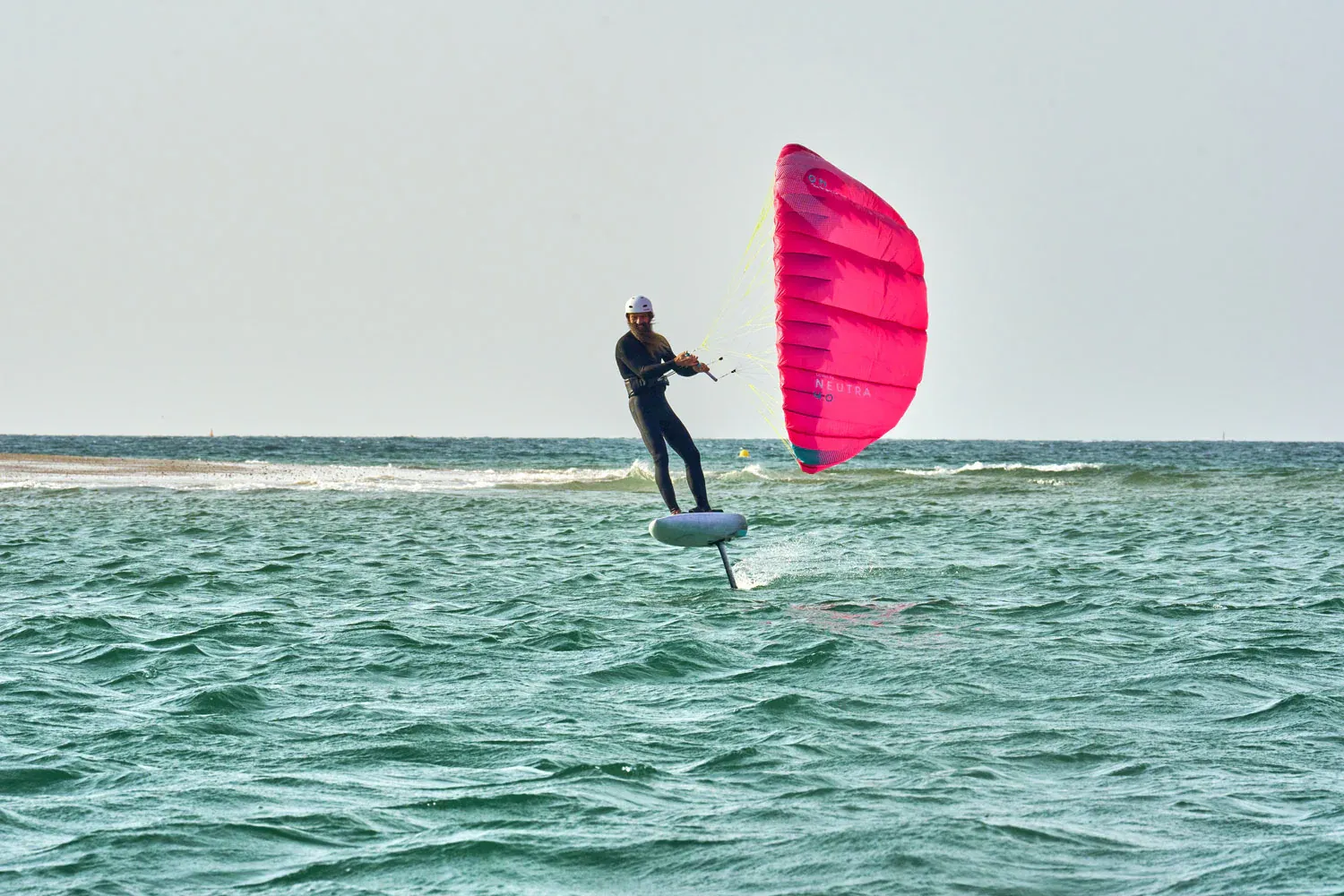
If you want to try parawingfoiling without spending premium prices, these are your two options. The Aeryn P1 Pocket Wing and Gong Lowkite are the most affordable parawings on the market, and both have earned genuine respect from the community. Neither is a toy. Both are capable wings that deliver the core parawingfoiling experience at a fraction of the price of BRM, Ozone, or F-One.
The question isn’t whether they’re good enough. They are. The question is which one suits your needs better. This comparison breaks it down.
Specs at a Glance
| Aeryn P1 | Gong Lowkite | |
|---|---|---|
| Sizes | 4 (3.0m to 6.0m) | 5 (3m to 7m) |
| Construction | Single-skin ripstop, spliced Dyneema bridle | Single-skin |
| Bar | Compact EVA foam | Standard |
| Key features | Trailing edge micro rod, colour-coded pigtails, low bridle count | Progressive power, wide size range |
| Heritage | Peter Lynn/PLKB (20+ years ram-air kites) | Gong (established board/foil brand) |
| Price | TBC (lowest on market) | ~£550–£700 / €650–€850 / $700–$850 |
| Colours | Ocean Blue, Coral Red | Single colour per size |
| Based | Netherlands (Equipe Trading B.V.) | France |
Price
Both wings undercut the rest of the market significantly, but the P1 goes further. The Aeryn P1 is the cheapest parawing you can buy. Exact pricing varies by retailer and region, but it consistently comes in below the Gong Lowkite.
The Gong Lowkite has more established, transparent pricing. Gong sells direct from France with clear EUR pricing, and the Lowkite has been on the market longer, so price data across regions is more reliable.
The Aeryn P1 is newer, and pricing varies more between retailers. As the brand and dealer network mature, pricing should become more consistent.
Verdict: P1 is cheaper. Lowkite has more predictable pricing.
Size Range
The Gong Lowkite wins here with five sizes from 3m to 7m. That 7m option is the largest single parawing size available from any brand and extends into genuine light wind territory (10 to 18 knots). If you ride in marginal conditions, the Lowkite gives you an option the P1 doesn’t.
The Aeryn P1 offers four sizes from 3.0m to 6.0m. The 6.0m covers light wind for lighter riders, but the gap below the Lowkite’s 7m is real for heavier riders or very light conditions.
Verdict: Lowkite wins. The 7m option is a genuine advantage.
Build Quality and Engineering
This is where the comparison gets interesting, because the P1 punches above its price point.
The Aeryn P1 uses a spliced Dyneema bridle (knot-free, maintaining full line tensile strength), a trailing edge micro rod (precision stiffening that maintains canopy shape during depower), and colour-coded pigtails. These are engineering details you’d expect on a premium wing, not a budget one. They come from the Peter Lynn/PLKB heritage: 20+ years of designing ram-air kites.
The Gong Lowkite uses standard single-skin construction with a straightforward bridle system. It’s well-built and reliable, but it doesn’t have the standout engineering details of the P1. Gong’s strength is in their board and foil ecosystem rather than in canopy-specific innovation.
Verdict: P1 has more impressive engineering details for the price.
Performance
Power and Low-End
The P1 generates surprisingly strong low-end power for a budget wing. Riders coming from inflatable wings notice the difference immediately. The spliced Dyneema and trailing edge micro rod contribute to a canopy that holds its shape well through the power range.
The Lowkite is known for progressive power delivery. It builds power gradually rather than loading up suddenly, which makes it forgiving for beginners. The power is there, but it arrives gently.
Upwind
Neither wing matches the upwind performance of premium brands. The Lowkite has a slight edge here based on community feedback, possibly due to its longer track record and more refined canopy shape. The P1’s upwind ability is serviceable but not its strongest attribute.
Stability
The Lowkite feels composed across its range. Progressive power delivery means fewer surprises in gusty conditions. The P1 is stable on the water but requires some learning for beach handling. Finding the right flying angle during ground launch takes a few sessions.
Verdict: Lowkite is slightly more polished in overall performance. P1 has stronger low-end power.
Ease of Use
The P1’s low bridle count and colour-coded pigtails make it one of the fastest parawings to rig. Fewer lines mean fewer tangles and simpler setup. For a first parawing, this is a real advantage.
The Lowkite is also straightforward to set up. Gong’s approach favours simplicity, and the progressive power delivery means beginners are less likely to be caught out by sudden loading.
The P1’s beach handling has a steeper learning curve. Finding the right angle to keep the wing flying on the ground takes practice. The Lowkite is more forgiving in this regard.
Verdict: P1 is faster to rig. Lowkite is easier to launch.
Dealer Network and Support
The Gong Lowkite has a longer track record and more established community presence. Gong sells direct from France with good European shipping, and the brand has a strong reputation in the wider foiling community. Customer support is primarily French-speaking, which can be a consideration for English-speaking buyers.
The Aeryn P1 has a growing dealer network (MACkite in the US, Powerkiteshop and SUP.co.uk in the UK, several EU dealers) and sells direct from aeryn.world. The Equipe Trading B.V. parent company distributes to 60+ countries through 650+ retailers, so the infrastructure for support is there even if the parawing-specific network is still building.
Verdict: Lowkite has more established presence. P1’s parent company has strong distribution infrastructure.
Who Each Wing Suits Best
Choose the Aeryn P1 if:
- Price is the primary factor and you want the absolute lowest entry cost
- You appreciate engineering quality (spliced Dyneema, trailing edge micro rod) even at budget prices
- You want fast, simple rigging with low bridle count and colour-coded pigtails
- You plan to add it as a strong-wind second wing alongside a larger premium wing
- You’re comfortable with a newer brand that’s still building its rider community
Choose the Gong Lowkite if:
- You want the widest size range at a budget price (especially the 7m for light wind)
- You value progressive, forgiving power delivery for learning
- You prefer a more established brand with longer community track record
- You’re buying from Europe and want straightforward direct purchasing
- You want a wing that’s slightly more polished in overall handling
The Verdict
Both wings are legitimate entry points to parawingfoiling. The P1 is cheaper and has more impressive engineering for the money. The Lowkite offers a wider size range and more polished handling. Neither will disappoint.
If we had to pick one for a first-time buyer: the Lowkite is the safer choice because of its progressive power, wider size range, and longer track record. If budget is the absolute priority, the P1 gets you on the water for less money with engineering details you wouldn’t expect at the price.
Related
- Aeryn P1 full review
- Gong Lowkite full review
- Best parawings for 2026
- Parawing size guide
- Where to buy parawing gear