Comparison
BRM Kanaha vs Ozone Pocket Rocket: Pioneer vs Paraglider Pedigree


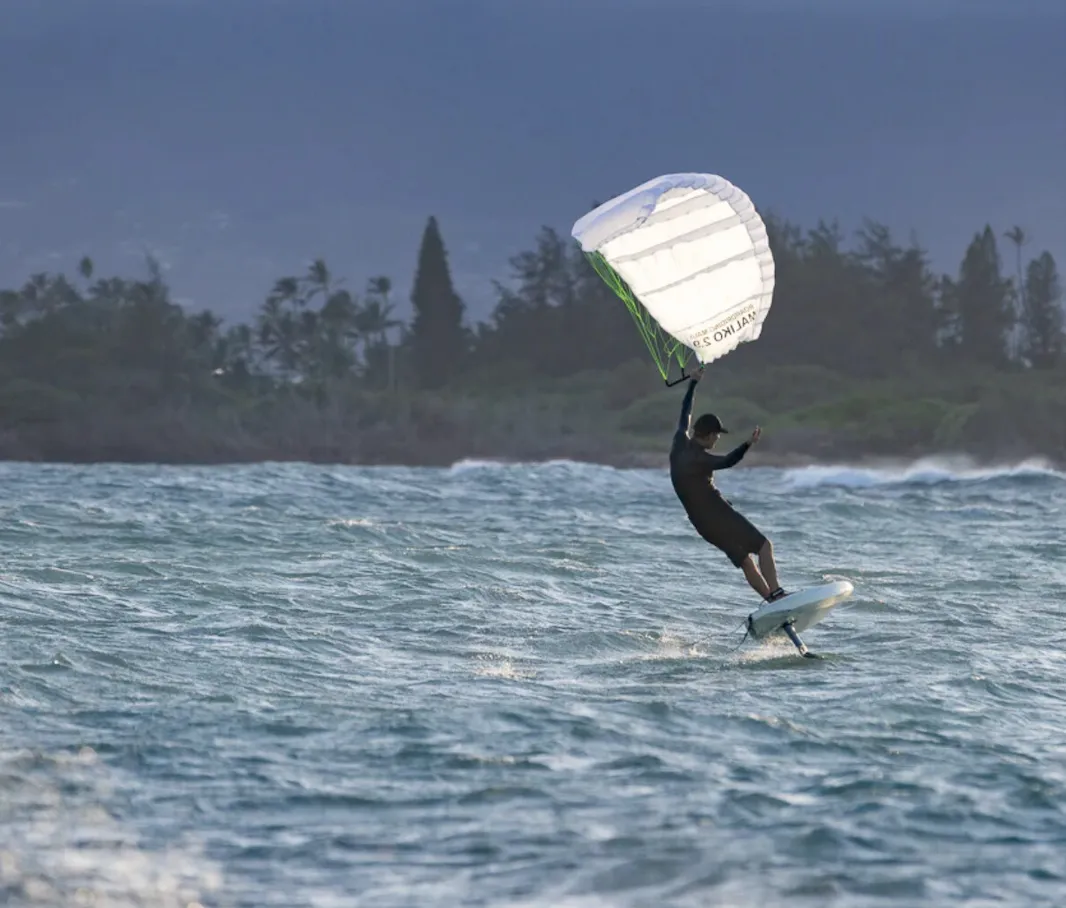
BRM created parawingfoiling. Greg Drexler’s Maliko V1 in August 2024 launched the sport, and the Kanaha is BRM’s all-round wing: the model most riders buy when they want a single BRM parawing to do everything. Ozone has 25+ years of paraglider design behind the Pocket Rocket, and they’ve applied that expertise to build one of the most composed, reliable parawings on the market.
These are two different approaches from two very different companies. BRM is a small, specialist brand in Hawaii. Ozone is a global paraglider manufacturer in the UK. Both make exceptional wings. Here’s how they compare.
Specs at a Glance
| BRM Kanaha | Ozone Pocket Rocket | |
|---|---|---|
| Sizes | 6 (2.5m to 6.2m) | 6 (1.9m to 5.0m) |
| Mid-size weight | 464g (4.0m) | 640g (4.3m) |
| Bar | 25cm carbon | 40cm carbon fibre |
| Bridle | Yoke system (A/C, no mid) | Colour-coded, standard |
| Wind ranges | Not published | Published (80kg baseline) |
| Price (mid-size) | ~$940–$1,080 | £820 / €939 / $1,204 (4.3m) |
| Heritage | Created the sport | 25+ years paraglider design |
| Ships from | Hawaii | UK/global dealers |
Weight and Packability
The BRM Kanaha is the lighter wing. A 4.0m Kanaha weighs 464g. A comparable 4.3m Pocket Rocket weighs 640g. That’s 176g of difference, which matters for travel, hiking to launches, and stash-and-ride sessions.
BRM’s compact 25cm carbon bar adds to the packability advantage. The entire 4.0m Kanaha setup fits in your pocket. The Pocket Rocket’s 40cm bar is larger and doesn’t pack as small.
Verdict: BRM wins on weight and pack size. It’s not close.
Upwind Performance
Both wings deliver strong upwind performance, but with different characters.
The Kanaha uses BRM’s yoke bridling system (A and C bridles without a middle connection), which provides responsive micro-adjustment. The compact 25cm bar requires precise, small inputs. Experienced riders describe the Kanaha’s upwind ride as direct and engaging.
The Pocket Rocket has been honed through Ozone’s paraglider design process. The upwind angles are among the best in the category, and the ride is smooth and predictable. The 40cm bar gives more leverage for sheeting, which some riders prefer for sustained upwind riding.
Verdict: Both are excellent upwind. Kanaha is more direct. Pocket Rocket is smoother.
Stability and Conditions
The Pocket Rocket excels in messy conditions. Gusty wind, choppy water, variable direction: the Pocket Rocket absorbs it all without becoming twitchy. This composure comes from Ozone’s paraglider heritage, where stable canopy behaviour in turbulence is a design priority.
The Kanaha is stable when overpowered (BRM wings are known for going quiet rather than surging in gusts), but the compact bar and direct bridling system mean you feel more of what the wind is doing. In clean, steady conditions, this directness is a strength. In messy conditions, it demands more from the rider.
Verdict: Pocket Rocket is better in messy conditions. Kanaha rewards skilled riders in clean wind.
Water Relaunch
The Pocket Rocket is the best relaunch parawing on the market. Colour-coded bridle lines make orientation fast, the canopy inflates reliably, and Ozone marks the leading edge centre for quick identification on the water surface.
The Kanaha requires more technique. BRM’s single-skin construction and compact design can be trickier to relaunch, especially for newer riders. Experienced BRM riders develop reliable relaunch skills, but there’s a learning curve.
Verdict: Pocket Rocket wins clearly. If relaunch reliability matters (solo sessions, learning, remote spots), Ozone is the safer choice.
Wind Range Information
Ozone publishes wind ranges for every size, based on an 80kg rider. This gives you clear guidance for sizing.
BRM deliberately doesn’t publish wind ranges. Their reasoning is that the usable range depends too much on rider weight, board, foil, and skill. While this is true for all brands, the lack of published data makes buying decisions harder, especially for first-time BRM buyers.
Verdict: Ozone wins on transparency. BRM’s approach is principled but less convenient.
Pricing and Availability
The Kanaha costs approximately $940 to $1,080 depending on size. BRM ships from Hawaii, which means US buyers get free shipping but UK and EU buyers face international shipping costs, customs duties, and handling fees. This can add 20%+ to the purchase price.
The Pocket Rocket ranges from £795 to £870 / €879 to €999 / $1,029 to $1,235. Ozone has a strong global dealer network, making the Pocket Rocket easy to buy locally in the UK, EU, US, and beyond.
Verdict: Similar pricing in USD. Pocket Rocket is easier and often cheaper to buy outside the US due to Ozone’s dealer network.
Brand and Community
BRM has the deepest community roots in parawingfoiling. Greg Drexler is accessible, active in community forums, and responsive to rider feedback. BRM riders are dedicated and knowledgeable. The community is smaller but tighter.
Ozone has a larger, more diverse user base across both parawingfoiling and paragliding. Their dealer support infrastructure is more established, and warranty/repair processes are more standardised.
Verdict: BRM for community depth. Ozone for support infrastructure.
The Verdict
Choose the BRM Kanaha if:
- Weight and packability are your top priorities
- You want the wing that created the sport, from the brand that pioneered it
- You prefer a compact, direct handling character
- You’re an experienced rider comfortable with a higher skill floor
- You value a tight-knit community with direct access to the designer
Choose the Ozone Pocket Rocket if:
- You ride in messy, gusty, or variable conditions
- Reliable water relaunch is important (learning, solo, remote sessions)
- You want published wind ranges to guide your sizing
- You prefer a smoother, more composed handling character
- You want easy local availability through Ozone’s global dealer network
For pure performance, both are exceptional. The Kanaha is the lighter, more direct tool. The Pocket Rocket is the more composed, accessible one. Your experience level and typical conditions should guide the decision.
Related
- BRM full review
- Ozone Pocket Rocket full review
- Best parawings for 2026
- Parawing size guide
- Setup and rigging guide