Guide
Light Wind Parawing Foiling: How to Ride When the Wind Barely Shows Up
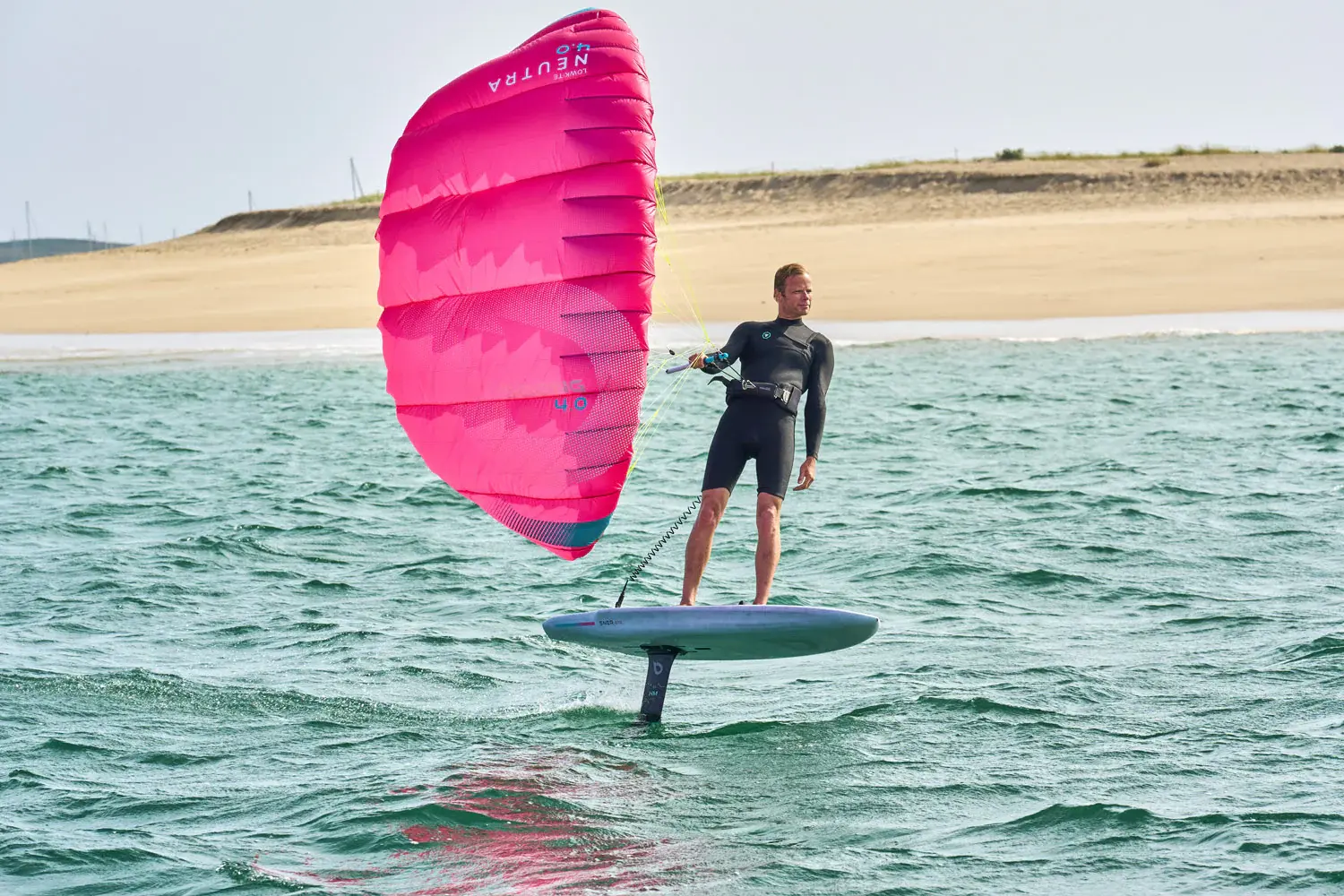
Light wind is where parawing foiling shines. While wingfoilers are standing on the beach waiting for 15 knots, a parawing foiler on the right setup can be cruising at 10. The harness transfers the wing’s pull directly to your body, so even small amounts of power become usable. But light wind riding isn’t just about strapping on a bigger wing. The board, foil, technique, and launch method all matter. Get them wrong and you’ll spend more time swimming than flying.
This guide covers what “light wind” means for parawing foiling, how to choose the right equipment, launch techniques that work when there’s barely enough breeze, and the riding adjustments that keep you on the foil.
What Counts as Light Wind?
For parawing foiling, light wind is roughly 10 to 14 knots. Below 10 knots, even the largest parawings struggle to generate enough power for most riders. Above 14 knots, any mid-range wing size will get you going without special technique.
That 10 to 14 knot window is where equipment choice and technique make the difference between a great session and a frustrating paddle home.
For context:
- 10 knots: leaves barely rustling, small wavelets on water
- 12 knots: flags extend, consistent ripples on water
- 14 knots: small branches moving, noticeable whitecaps starting
Your actual light wind threshold depends on your weight, skill level, and equipment. A 60kg rider on a high-aspect foil might ride comfortably at 9 knots. A 95kg rider on a standard foil might need 13 knots minimum with the same wing.
Wing Size for Light Wind
The instinct is to go as big as possible. That works up to a point, but there are trade-offs.
Bigger Wings: More Power, More Weight
A 5.0m or 6.0m+ parawing generates significantly more pull than a 3.0m or 4.0m. In light wind, that extra power can be the difference between foiling and floating. But larger wings are heavier, which means they need more wind to stay inflated and responsive. A heavy 6.0m in 10 knots may feel sluggish and difficult to relaunch if it collapses.
The Sweet Spot
For most riders (65 to 85kg), a 5.0m to 6.0m wing is the light wind sweet spot. It provides enough area to catch light wind while remaining responsive enough to control.
By brand and model:
| Wing | Largest Size | Published Light Wind Range | Notes |
|---|---|---|---|
| F-One Frigate | 6.5m | 10–18 knots (75kg rider) | Widest size range, best option for dedicated light wind |
| Flysurfer POW | 5.0m | 10–18 knots (estimated) | Best low-end power per size, foil kite heritage |
| Aeryn P1 | 6.0m | 10–18 knots (estimated) | Most affordable large-size option |
| Ozone Pocket Rocket | 5.0m | 12–20 knots (80kg rider) | Excellent upwind, but 5.0m is the ceiling |
| BRM Maliko 2 | 5.0m | Not published | Designed for downwind runs, good light wind pull |
| Gong Lowkite | 7.0m | Varies | Largest single size available from any brand |
The F-One Frigate 6.5m and Gong Lowkite 7.0m extend the furthest into light wind territory. The Flysurfer POW compensates for fewer sizes with stronger low-end power per square metre.
For detailed size recommendations across all brands, see our parawing size guide.
Board Choice for Light Wind
Your board matters more in light wind than in any other condition. The goal is to get on foil as quickly as possible with the least power.
Volume
More volume means more flotation, which means you sit higher in the water while building speed. A board with 80+ litres makes light wind starts significantly easier than a 50-litre downwind board. You can stand comfortably, wait for gusts, and step into the foil without sinking.
Recommended: For dedicated light wind sessions, use the largest board you own. If you’re buying specifically for light wind, look at 80 to 120 litre boards.
Length
A longer board carries more momentum. Once you start moving, a longer hull glides further between gusts, giving the wing more time to pull you up to foiling speed. Short boards stop faster when power drops.
Foil Position
Some boards allow you to adjust the foil track position. For light wind, move the foil further forward. This shifts the lift point closer to the centre of the board, making it easier to get on foil at lower speeds.
Dedicated Light Wind Boards
Several boards are designed specifically for light wind foiling:
- Starboard Above LS: High volume, long waterline, designed for early take-off
- F-One Rocket Free DW: Downwind specialist with excellent light wind capability
- Duotone Skybrid: Hybrid shape that transitions well from displacement to foiling
For a full breakdown, see our best foil boards for parawing foiling guide.
Foil Selection for Light Wind
The foil is arguably the most important equipment choice for light wind riding. The right front wing makes a bigger difference than the right parawing size.
Front Wing Area
A larger front wing generates more lift at lower speeds. For light wind, you want a front wing with at least 1500 cm² of surface area. Wings above 2000 cm² are purpose-built for light wind and provide the earliest possible take-off.
Trade-off: Large front wings are slower at top speed and feel less manoeuvrable at higher speeds. Most light wind riders accept this trade-off because the goal is to be on foil, not to go fast.
Aspect Ratio
High-aspect front wings (long and narrow) are more efficient at generating lift than low-aspect wings (short and wide) at the same speed. For light wind, a high-aspect wing lets you foil at lower speeds and requires less power from the parawing to stay up.
Trade-off: High-aspect wings are less forgiving of technique errors. They stall more abruptly and recover more slowly. If you’re still developing your foiling skills, a mid-aspect wing may be a better choice.
Recommended Approach
If you’re buying one foil for all conditions, choose a mid-to-large front wing (1500 to 1800 cm²) with mid-aspect ratio. This covers moderate and light wind without becoming unrideable in stronger conditions.
If you’re building a quiver for maximum light wind performance, add a dedicated large, high-aspect front wing (2000+ cm²) and swap it in when conditions are marginal.
Launch Techniques for Light Wind
Getting airborne in 10 to 12 knots requires more technique than in 18+ knots, where the wing practically launches itself.
Standard Beach Launch
- Lay the canopy out with the leading edge into the wind
- Pick up the bar and walk forward until the lines are taut
- Wait for a gust (even a small one)
- As the wing begins to inflate, take slow steps forward to feed airflow into the canopy
- Let the wing rise gradually. Don’t pull the bar in aggressively.
Light wind adjustment: In marginal wind, the canopy may partially inflate and then collapse before fully launching. Be patient. Wait for consistent pressure rather than trying to force the launch in a lull. If the wind is on the edge, face directly into it and hold the bar high with one hand to expose as much canopy to the wind as possible.
Water Start (S-Start)
The S-start is a technique for getting on foil from a standstill in the water. It’s particularly useful in light wind because it lets you build speed gradually.
- Sit or float on your board with the wing overhead or partially inflated
- Hook into the harness line
- Bear away (point downwind) to build initial speed
- Once moving, gradually head upwind in an S-shaped path
- Each upwind turn loads the wing and builds speed
- When you feel enough lift, push the board flat and let the foil take over
The key is patience. Each S-turn builds a little more speed. Resist the temptation to force the foil out of the water too early. Let the speed accumulate.
Dock Start
If you have access to a dock, jetty, or pontoon, a dock start eliminates the hardest part of light wind riding: the water start.
- Stand on the dock with the wing flying overhead
- Step onto the board (already in the water, foil down)
- Drop off the dock edge and immediately load the harness
- The extra height gives you a brief speed boost from gravity
- Use that momentum to get on foil before speed decays
Dock starts are the easiest way to get foiling in marginal conditions, which is why many light wind spots have dedicated launch pontoons.
Riding Technique in Light Wind
Once you’re on foil, staying up in light wind requires adjustments to your normal riding style.
Weight Forward
In light wind, shift your weight slightly forward compared to your normal stance. This keeps the board speed up and prevents the foil from climbing too high (which increases drag and bleeds speed you can’t afford to lose).
Smooth Inputs
Every sudden movement costs speed. Smooth bar inputs, smooth weight shifts, and smooth turns. In 12 knots, the margin between foiling and sinking is thin. Aggressive inputs burn energy the wing can’t replace.
Pump the Foil
Pumping (rhythmically weighting and unweighting the foil by pressing and releasing with your front foot) generates additional lift. In light wind, a few well-timed pumps can keep you on foil through a lull that would otherwise drop you.
Technique: Press down with your front foot to drive the board forward and down. Release to let the foil rise. Repeat in a smooth rhythm. The motion comes from your legs, not your upper body.
Ride Broad
In light wind, riding on a broad reach (angled downwind) generates more apparent wind than riding directly crosswind. The apparent wind from your forward motion adds to the true wind, giving the parawing more power.
Trade-off: Riding broad takes you downwind. Plan your runs so you have room to drift and can return upwind when a gust arrives. Alternate between broad reaching (for speed) and upwind tacking (to recover ground) as the wind allows.
Use Gusts
Light wind is rarely constant. It comes in pulses. Learn to feel the gusts arriving (the wing loads slightly, the lines tension) and use that extra power to accelerate and climb to a safe foiling height. In the lulls between gusts, maintain what you have with smooth riding and gentle pumping.
When to Size Up vs. When Conditions Aren’t Enough
The hardest decision in light wind parawing foiling is knowing when to go bigger and when to go home.
Size up if: You can get on foil in gusts but keep dropping in the lulls. A larger wing or a larger foil front wing may bridge the gap.
Go home if: You can’t get the wing to launch or stay inflated. If the canopy repeatedly collapses on the beach, there isn’t enough wind for any parawing. No amount of technique or equipment compensates for truly insufficient wind.
The 10-knot rule: If the sustained wind (not gusts) is below 10 knots, most riders on most equipment won’t sustain foiling. Occasional gusts to 12+ can make it workable, but you’ll spend more time waiting than riding. Be honest with yourself about whether it’s a session or a swim.
Frequently Asked Questions
What’s the minimum wind for parawing foiling?
For most riders (70 to 85kg) on a 5.0m+ wing with a large foil, sustained 10 to 12 knots is the practical minimum. Lighter riders on optimised setups may get going in 8 to 10 knots. Below 10 knots sustained, conditions are marginal for everyone.
Should I buy a bigger wing or a bigger foil for light wind?
Both help, but the foil makes the bigger difference. A larger, higher-aspect front wing lets you foil at lower speeds, which means the wing needs less power. If you can only invest in one upgrade, go foil first.
Can I parawing foil in no wind?
No. A parawing needs wind to generate power. Unlike a SUP foil (where you pump yourself onto foil), a parawing provides no power in zero wind. If the wind dies completely, you’re paddling.
Is light wind parawing foiling good for beginners?
It’s mixed. Light wind means lower speeds and gentler falls, which is good for confidence. But the technique demands are higher: launch is harder, staying on foil requires better balance, and there’s less margin for error. Beginners will learn faster in moderate wind (14 to 20 knots) where the wing provides consistent power.
What’s better for light wind: the Flysurfer POW or F-One Frigate?
The Flysurfer POW has stronger low-end power per size. The F-One Frigate offers a 6.5m option that the POW doesn’t match. If you want maximum power from a 4.0m to 5.0m, the POW. If you want to go bigger than 5.0m, the Frigate’s 6.5m is the best option.
The Bottom Line
Light wind parawing foiling rewards the right equipment and the right technique. A large wing, a high-volume board, and a big foil front wing give you the best chance of getting on foil. Smooth riding, foil pumping, and patience keep you there.
The honest reality: below 10 knots sustained, you’re probably not foiling. Between 10 and 14, the right setup and technique make it possible. Above 14, you don’t need this guide.
For help choosing the right wing size, see our parawing size guide. For board recommendations, read our best foil boards guide. For a full comparison of the best parawings across all conditions, check our best parawings for 2026 guide.
Found this guide helpful?
Get new gear guides, honest reviews, and the best parawing deals straight to your inbox.