Guide
Parawing vs Wing Foiling: What's the Difference?
Parawing vs wing foil, parawing vs wingfoil, parawing vs wing. Whichever phrasing you searched for, the comparison is the same: two foiling sports that look nearly identical from shore, but use very different equipment and feel very different on the water. This guide covers what separates them and helps you decide which one suits you.
From shore, parawing foiling and wing foiling look almost identical: someone standing on a foil board, holding some kind of wing, gliding across the water. The key differences are in how the wing is held, how power is generated, and what happens when you want to stop using it mid-session. Parawings can be stowed in a waist pouch and redeployed. Wings cannot.
The Core Difference
Wing foiling uses a handheld inflatable wing. You hold it with both hands, generate power by angling it into the wind, and steer by shifting your body weight and the wing position. There is no harness connection. All the wing’s power goes through your arms.
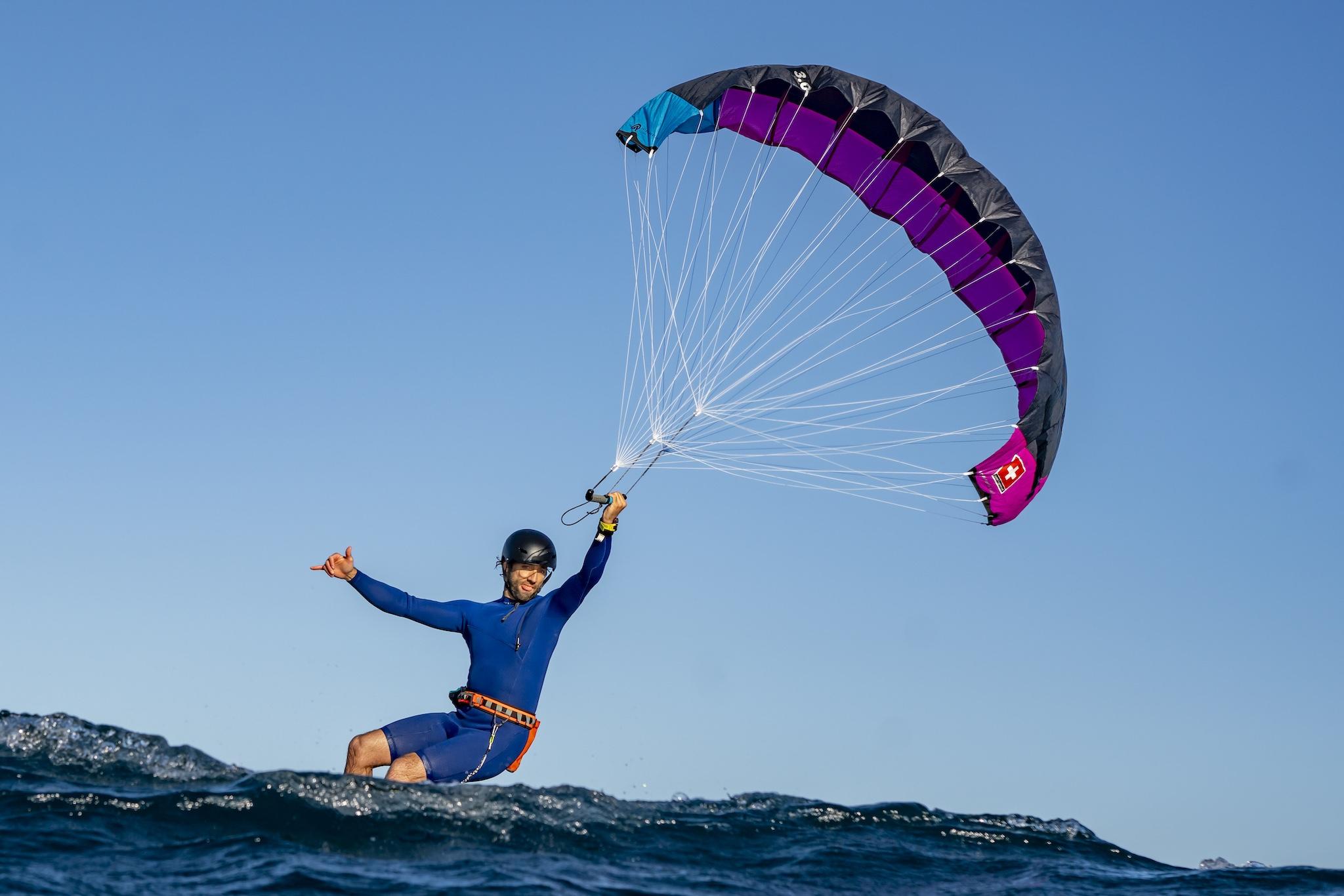
Parawing foiling uses a small canopy (the parawing) flown on short lines via a control bar that you hold with both hands. Most riders fly parawings handheld. Some also connect the bar’s harness line to a spreader bar harness on longer sessions or downwinders, which transfers the pulling load to their hips and reduces arm fatigue. Either way, the wing can be stowed in a waist pouch mid-session for hands-free riding, then redeployed when you need power again.
The ability to stow and redeploy the wing is what truly sets parawing foiling apart, not just the bar and line setup.
Equipment Comparison
| Parawing Foiling | Wing Foiling | |
|---|---|---|
| Wing type | Canopy (single-skin or double-skin), 2m to 7m | Inflatable wing, 3m to 7m |
| Control | Control bar held in both hands (spreader bar harness optional) | Handheld (both hands) |
| Harness | Spreader bar harness (optional) | None |
| Board | Foil board (often same as wing foiling) | Foil board |
| Foil | Hydrofoil (often same as wing foiling) | Hydrofoil |
| Weight of wing | 300g to 950g | 2kg to 4kg+ |
| Pack size | Fits in a small bag or stash belt | Requires pump and larger bag |
| Setup time | Unfold, connect lines, fly | Inflate, check, launch |
The board and foil can often be shared between the two sports. The wing and harness are the main equipment differences.
How They Feel on the Water
Wing foiling
Your arms hold the wing at all times. In light wind, this is manageable. In stronger wind (20+ knots), the sustained load on your arms, shoulders, and core becomes significant. Sessions tend to be shorter because arm fatigue limits how long you can ride.
Steering is intuitive: you move the wing where you want power, and your body follows. Gybes and tacks involve swinging the wing through transitions while maintaining balance on the foil. There’s a direct, physical connection between you and the wing that many riders find satisfying.
Water starts are straightforward because you can position the wing while standing in the water. If you fall, you grab the wing handle and go again.
Parawing foiling
When using a harness, it takes the wing’s pulling load, meaning your arms are relatively free. Without one, the load goes through the bar directly to your arms, which is more tiring but works well for shorter sessions. This makes sessions significantly less tiring, and many riders report being able to ride for much longer before fatigue sets in.
The parawing flies above you, connected by lines. Managing the canopy requires different skills: launching, landing, and the stow/deploy cycle (packing the wing away mid-session and relaunching it) are unique to parawing foiling. If the wing crashes into the water, you need to sort the lines and relaunch from the surface, which takes practice.
The riding experience once on foil is quieter and smoother. The parawing generates pull from a higher position, which produces a different foiling feel compared to the lower, more direct pull of a handheld wing.
Physical Demands
Wing foiling
- Arms and shoulders: High demand. Holding and controlling the wing is the primary physical challenge.
- Core: Moderate to high. Balancing on the foil while managing the wing requires sustained core engagement.
- Legs: Moderate. Standard foil riding demands.
- Endurance: Limited by arm fatigue. Typical sessions: 45 minutes to 1.5 hours before fatigue becomes a factor.
Parawing foiling
- Arms and shoulders: Low to moderate when using a harness, which takes the pulling load. Without a harness, arm demand is higher, particularly on upwind legs.
- Core: Moderate. When using a harness it transfers force through your core, but the demand is lower than holding a handheld wing.
- Legs: Moderate. Standard foil riding demands.
- Endurance: Significantly longer sessions possible. Riders commonly report 2+ hour sessions without significant fatigue.
For riders who struggle with arm fatigue from wing foiling, or who have shoulder or arm injuries that limit how long they can hold a wing, parawing foiling removes that constraint.
Wind Range and Conditions
Both sports work in similar wind ranges (roughly 10 to 35 knots depending on equipment size), but there are practical differences.
Parawing foiling advantages in wind:
- Lighter weight wings mean you can carry a wider quiver without adding bulk
- The harness lets you handle more power comfortably in stronger wind
- Ultra-compact pack size makes parawings ideal for travel and downwind runs where you finish far from your start point
Wing foiling advantages in wind:
- Easier to manage in very gusty, shifty conditions (the wing is always in your hands)
- Simpler water recovery after falls (grab the handle, go)
- No line management or canopy tangles to deal with
Learning Curve
Wing foiling
The learning curve is relatively well understood because the sport has been around since 2019. Many schools offer lessons, and the gear is widely available to demo. Getting on foil typically takes 3 to 10 sessions for riders with board sports experience. The main challenge is coordinating the wing, the board, and the foil simultaneously while building arm endurance.
Parawing foiling
The sport is newer (launched in 2024), so there are fewer schools and less structured learning pathways. Parawing foiling is best suited to riders who already have solid foiling skills. The learning curve rewards experience rather than replacing it. For experienced foilers, the transition is quick: the harness removes the arm fatigue problem, and the parawing generates pull consistently. The additional skills to learn are canopy management: launching, landing, stowing, and relaunching.
Line tangles after crashes are the most commonly cited frustration for new parawing foilers. These skills improve quickly with practice but do add a learning element that wing foiling doesn’t have.
Cost Comparison
| Parawing Foiling | Wing Foiling | |
|---|---|---|
| Wing/Parawing | $700 to $1,500 | $800 to $1,500 |
| Harness | Optional, $100 to $300 (spreader bar) | Not required |
| Board | $800 to $2,000 | $800 to $2,000 |
| Foil | $800 to $2,500 | $800 to $2,500 |
| Total entry cost | ~$2,400 to $6,300 | ~$2,400 to $6,000 |
If you already wing foil, the board and foil can usually be shared. Adding parawing foiling to an existing wing foil setup costs just the price of a parawing ($700 to $1,500), with a spreader bar harness ($100 to $300) as an optional extra if you decide you want one.
Can You Do Both?
Yes, and many riders do. The board and foil transfer directly between the two sports. Riders who own both tend to use wing foiling for gusty, variable conditions where the simplicity of a handheld wing is an advantage, and parawing foiling for longer sessions, lighter wind days, or situations where the reduced fatigue and ultra-portable gear make more sense.
The two sports complement each other well rather than competing. Which one you reach for on any given day depends on the conditions and what kind of session you want.
Frequently Asked Questions
Is parawing foiling easier than wing foiling?
Parawing foiling is best suited to riders who already have foiling experience. For those with solid foil skills, the transition is typically quick. Most crossover riders are comfortable within a few sessions. The main additional skill is canopy management (launching, stowing, relaunching, and dealing with line tangles).
Can I use my wing foiling board for parawing foiling?
In most cases, yes. Any foil board that works for wing foiling will work for parawing foiling. Some riders prefer slightly different board shapes for each sport, but it’s not essential, especially when starting out.
I already wingfoil. What transfers if I try parawing foiling?
Most of your setup and a lot of your skill carries straight over. Your foil board and hydrofoil work for both sports, so in most cases you can try parawing foiling on the gear you already own. Your foiling instincts (board trim, reading the foil, balance, water sense) transfer directly, which is why experienced wingfoilers tend to pick parawing foiling up quickly. What is new is the wing itself: instead of holding an inflatable wing, you fly a soft canopy on short lines through a control bar, and you learn to launch it, steer it, and stow and redeploy it mid-session. The arm fatigue that limits wingfoil sessions largely goes away, since the pull runs through the bar and, if you choose, a spreader bar harness. Expect the canopy handling and the occasional line tangle to be the main learning curve, not the foiling.
Do I need a kite harness for parawing foiling?
No. Most riders fly parawings handheld, and the wings are designed to work that way. A spreader bar harness is an option some riders use on longer sessions, downwinders, or long upwind legs to take the pulling load off their arms, but it is not required. If you decide you want one, dedicated parawing harnesses from Ozone (Parawing Stash Harness) and North (Stash Belt) are the best choice as they have an integrated stow pouch. A kiteboarding spreader bar harness also works. Do not use a wing foiling harness as these lack the required hook. Our harness and spreader bar guide covers everything you need to know about choosing and setting one up.
Which sport is better for light wind?
Parawing foiling has an advantage in light wind because the parawing weighs a fraction of an inflatable wing. In 10 to 15 knot conditions, holding a heavy wing while trying to generate enough power to get on foil is physically demanding. A lightweight parawing flown on short lines makes light wind sessions more achievable, whether handheld or hooked into a harness.
Is parawing foiling safer than wing foiling?
Both sports carry similar risks related to foiling (collision, falling at speed, shallow water). Parawing foiling adds the specific risk of line entanglement. Wing foiling adds the risk of being hit by the wing during falls. Neither sport is categorically safer than the other. Wearing appropriate safety gear (helmet, impact vest) is recommended for both.
The Bottom Line
Parawing foiling and wing foiling are different tools for the same waterway. Wing foiling gives you a direct, physical connection to a handheld wing with simple crash recovery. Parawing foiling gives you a bar and line system with much lighter gear, the option to add a harness if you want to reduce arm fatigue, and a stow-and-redeploy cycle that no other foiling discipline can match.
If arm fatigue limits your wing foiling sessions, parawing foiling solves that problem. If you prefer the simplicity of grabbing a wing and going without lines or canopies to manage, wing foiling is the more straightforward sport.
Many riders end up doing both, choosing based on the day’s conditions and what kind of session they want. The two sports share enough equipment that trying both doesn’t require buying a completely separate setup.
Ready to Try Parawing Foiling?
If you’re curious about adding parawing foiling to your toolkit, these guides will help you get started:
- Best parawings: every wing on the market compared side by side
- How to parawing foil: step-by-step from beach setup to riding on foil
- Parawing size guide: choose the right size for your weight and conditions
- Best foil boards: boards that work well for parawing foiling
- Where to buy gear: retailers by region
- Harness and spreader bar guide: the key equipment difference explained
- Safety and self-rescue: what makes parawing foiling safer
- Parawing foiling vs kiteboarding: how parawing foiling compares to the other harness sport
- How to wing foil: our beginner guide to wing foiling if you’re weighing up both sports
Found this guide helpful?
Get new gear guides, honest reviews, and the best parawing deals straight to your inbox.