Flysurfer
Flysurfer POW: Full Brand Overview (2026)
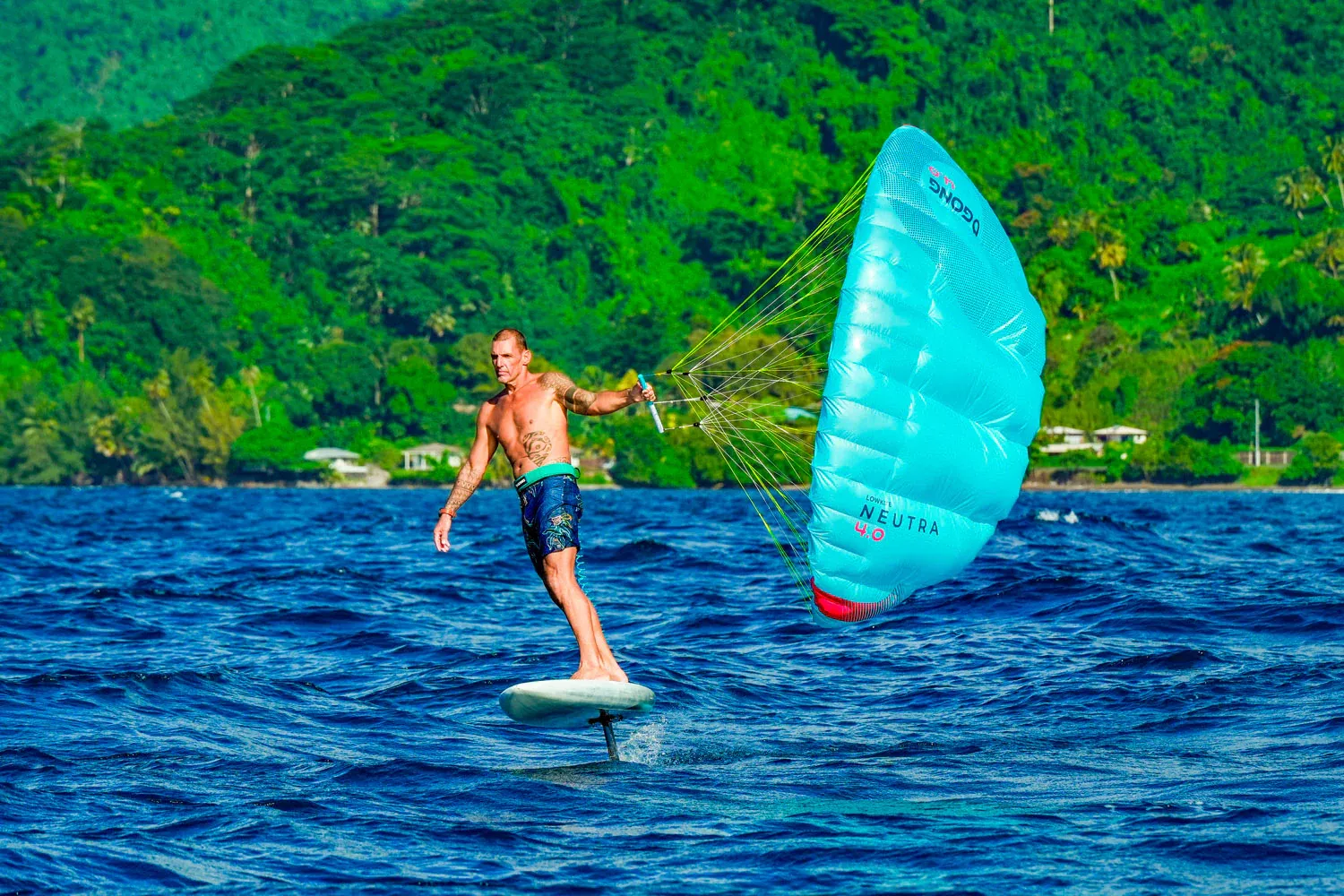
Flysurfer is the brand that was always going to make a parawing. With over two decades of foil kite expertise, single-skin aerodynamics is their core competency. The POW (Pop Out Wing) is their first purpose-built parawing, and it arrived with a reputation for the widest usable wind range and strongest upwind performance in the category.
This page covers who Flysurfer are, what the POW offers, and how it compares to the rest of the market.
About Flysurfer
Flysurfer was founded in 2001 as a subsidiary of Skywalk GmbH & Co., based in Chiemsee, Bavaria, in southern Germany. The founding team of Armin Harich, Ralf Grösel, Arne Wehrlin, Manfred Kistler, and Thomas Allertseder all came from paragliding backgrounds. They met at the BOOT watersports trade fair in Düsseldorf and shared a vision: bringing aviation-grade aerodynamic expertise into kitesurfing.
Their Bavarian location shaped the brand. Inland, lighter wind conditions pushed them towards foil kite specialisation, where closed-cell ram-air designs could generate power in conditions where inflatable kites couldn't. This made Flysurfer the undisputed leader in foil kites, a position they've held for two decades.
Flysurfer's heritage is directly relevant to parawingfoiling. The aerodynamics of a parawing share fundamental principles with foil kites: single-skin or ram-air canopy, soft construction, bridle-based control. No other parawing brand has this depth of experience with the underlying technology.
The Flysurfer POW
The POW (Pop Out Wing) is Flysurfer's only parawing model. It launched in 2025 and quickly became one of the most popular parawings on the market. Demand has outstripped supply at several retailers.
Available Sizes
| Size | Weight | Aspect Ratio |
|---|---|---|
| 1.7m | 600g | 2.8 |
| 2.5m | 680g | 2.8 |
| 4.0m | 820g | 2.8 |
| 5.0m | TBC | 2.8 |
The 5.0m is a newer addition to the range, extending into lighter wind conditions. All sizes share the same 2.8 aspect ratio.
Key Features
- Four bridle sets: Most parawings use three. The fourth set, with a pulley mechanism on the second bridle, provides automatic profile and balance adjustment across the power range. This is the core engineering difference.
- 42cm ergonomic carbon bar: J-shaped pistol grip with an upturned front section. Uniquely comfortable for the front hand. Pin-access bridle attachment for easy harness line installation.
- Coated bridle lines: Visible underwater and snag-resistant. Practical detail for water relaunch.
- Nylon sailcloth canopy: Softer than typical kite materials, with flexible nylon battens on the leading edge for profile stiffening.
- Anti-flutter ribs: Minimal ribbing for weight reduction while maintaining stability.
- Packs to hoodie size: No pump, no bladders.
What's Included
Each package includes the POW wing, POW Bag [M], 42cm Parawing Handle, safety guide, and repair kit.
Pros and Cons at a Glance
Pros
- Arguably the widest usable wind range of any parawing
- Exceptional upwind performance ("bonkers fast upwind" per The Inertia)
- Strongest low-end power for getting moving in marginal conditions
- 20+ years of foil kite heritage directly applicable to parawing design
- Four bridle sets with pulley system for automatic profile adjustment
- Ergonomic J-shaped carbon bar is very comfortable
- Smooth, predictable power delivery
- Forgiving in gusty or variable winds
- Free POW Academy video tutorial series
Cons
- All bridle lines are the same colour (no colour coding for tangle identification)
- Lines on the 4.0m are very long (210cm), longer than any competitor
- 42cm bar is larger than most competitors, reducing portability
- Only four sizes (gap between 2.5m and 4.0m partially addressed by 5.0m)
- No leash included
- Heavier than some competitors at equivalent sizes
What Riders Say
The POW has generated strong feedback from the community, with consistent praise for two things: wind range and upwind performance.
Wind range is the headline. The Inertia described it as having "probably the widest wind range of all the parawings tested." MACkite tested the 2.5m with a 90kg rider and found it usable from 22 knots up to 30+. The pulley-controlled bridle system adjusts the canopy profile automatically, keeping the wing efficient across a broader envelope than fixed-bridle designs.
Upwind performance is the other standout. Multiple reviewers describe the POW as the best upwind parawing they've tested. One experienced rider on the Progression Project forum noted the POW "goes upwind bonkers fast." This is where Flysurfer's foil kite heritage shows most clearly.
Low-end power draws praise too. The POW pulls harder in the low end than most competitors, making it effective at getting riders up on foil in lighter or more marginal conditions.
On the critical side, the same-colour bridle lines are a consistent complaint. When lines tangle (and they will), identifying which line goes where is slower than on colour-coded systems like F-One or Ensis. The long lines on the larger sizes also compromise packability compared to BRM.
How Does Flysurfer Compare?
The POW competes at the premium end alongside the F-One Frigate and Ozone Pocket Rocket.
vs F-One Frigate: The Frigate is the more balanced all-rounder. The POW specialises in wind range versatility and low-end grunt. The Frigate offers 8 sizes vs the POW's 4, colour-coded bridles, and a pre-attached harness line. The POW has deeper foil/ram-air heritage. Both are premium options.
vs Ozone Pocket Rocket: Both excel upwind. The Pocket Rocket is lighter, has a shorter minimalist bar, colour-coded bridles, and is more settled in high winds. The POW has stronger low-end pull and a wider usable wind range. The Pocket Rocket is better when overpowered; the POW is better in marginal conditions.
vs BRM: BRM pioneered the sport and offers the lightest, most packable wings available. The POW is heavier but has a wider wind range and stronger low-end power. BRM offers four specialised models; Flysurfer offers one versatile design.
vs Gong Lowkite: Very different price points. The Lowkite is the accessible entry option. The POW is a premium specialist. If budget allows and you want the best wind range and upwind performance, the POW delivers. If value matters most, the Lowkite is the better starting point.
Pricing
| Size | GBP | EUR | USD |
|---|---|---|---|
| 1.7m | ~£675 | €699 | $599 to $734 |
| 2.5m | ~£620 | €639 | $699 to $839 |
| 4.0m | ~£700 | ~€750 | $799 to $944 |
| 5.0m | TBC | €999 | ~$1,049 |
Pricing varies by retailer. USD ranges reflect different dealers. GBP prices from UK stockists. The 5.0m is a newer size with limited availability.
Notably, the POW is priced below the F-One Frigate at equivalent sizes, making it a competitive option in the premium bracket.
POW Academy
Flysurfer offers a free online video tutorial series called the POW Academy, covering everything from unboxing to advanced techniques. Six episodes cover wing components, pre-session checklist, handling (setup, launch, steering, emergency procedures), water usage (paddling, foiling, wave handling, relaunch), safety (self-rescue, emergency response), and maintenance (care, storage, repair).
This is a genuine differentiator. No other brand offers this level of structured instructional content for their parawing. For riders new to the sport, the POW Academy alone makes Flysurfer worth considering.
Where to Buy
UK
US
EU
- Surfpirates (Germany)
- Boardsports.eu
- Varuste.net (Finland)
Australia
Frequently Asked Questions
Is the Flysurfer POW good for beginners?
The POW's smooth power delivery and forgiving nature in gusty conditions make it accessible for intermediate riders who already have foilboard experience. Complete beginners may find the larger bar and long line lengths harder to manage than simpler setups like the Gong Lowkite or Ensis Roger. The free POW Academy videos are a significant help for riders learning the ropes.
What size POW should I get?
Wind ranges aren't published numerically per size, but testing data suggests the 2.5m suits a 90kg rider from 22 knots upward. The 4.0m covers moderate conditions for most rider weights. The new 5.0m extends into lighter wind. See our parawing size guide for sizing comparisons across all brands.
Why are the bridle lines all the same colour?
Flysurfer uses coated bridle lines designed for underwater visibility and snag resistance. The trade-off is that all lines look the same, making tangle identification slower than colour-coded systems from F-One, Ozone, or Ensis. This is the most common criticism of the POW.
What is the POW Academy?
A free online video tutorial series from Flysurfer covering setup, handling, water usage, safety, and maintenance in six episodes. It's the most comprehensive instructional resource offered by any parawing brand.
The Bottom Line
Flysurfer was always the brand you'd expect to produce an outstanding parawing, and the POW delivers on that expectation. Two decades of foil kite expertise show in the engineering: four bridle sets with pulley-controlled profile adjustment, exceptional upwind performance, and arguably the widest usable wind range in the category.
The POW is a specialist. It's not trying to be the lightest or the most packable. It's built for riders who want maximum wind range, the best upwind angles, and strong low-end power in marginal conditions. If those are your priorities, the POW is the standout choice. If you want a more balanced all-rounder, the F-One Frigate may suit you better. If you want proven stability in messy conditions, look at Ozone. But on raw wind range and upwind performance, the POW is the one to beat.
Want the full review?
Our detailed review covers community feedback, honest pros and cons, and how Flysurfer compares to the competition.
Read the full Flysurfer review