Ozone Review
Ozone Pocket Rocket Parawing Review (2026)
There is now a V2, and this page covers the V1. Ozone listed the Pocket Rocket V2 on 1 May 2026 in seven sizes, and it is shipping. This review covers the original six-size Pocket Rocket, which Ozone still sell alongside it. Read that before you act on anything below: our Pocket Rocket V2 review has verified specs, Ozone’s per-size wind range chart, what actually changed, and two independent ridden reviews, one from a rider who owns a V2 and a PowerPack in the same size. On their account the V2 is the better wing at top end, speed and upwind. The V1 remains a good wing and is heavily discounted, so choosing it deliberately is a reasonable decision. Choosing it by accident is not.
The Pocket Rocket is Ozone’s all-round parawing, and for most riders it is the one to start with. Ozone have spent over 25 years designing paragliders and foil kites, and that expertise shows in the canopy: strong upwind performance, reliable water relaunch, and published wind ranges for every size.
About Ozone
Ozone was founded in 1998 by David Pilkington, Mike Cavanagh and Rob Whittall, all paraglider pilots building wings they wanted to fly themselves, and expanded into kites in 2001. It manufactures through its own factory, Parapex, in Vietnam. Designing a stable, efficient canopy across a range of wind speeds is exactly what paraglider manufacturers have done for decades, so Ozone’s move into parawings was an extension of existing expertise rather than a pivot.
For the full brand background and the rest of the Ozone range, see our Ozone brand overview.
The Pocket Rocket
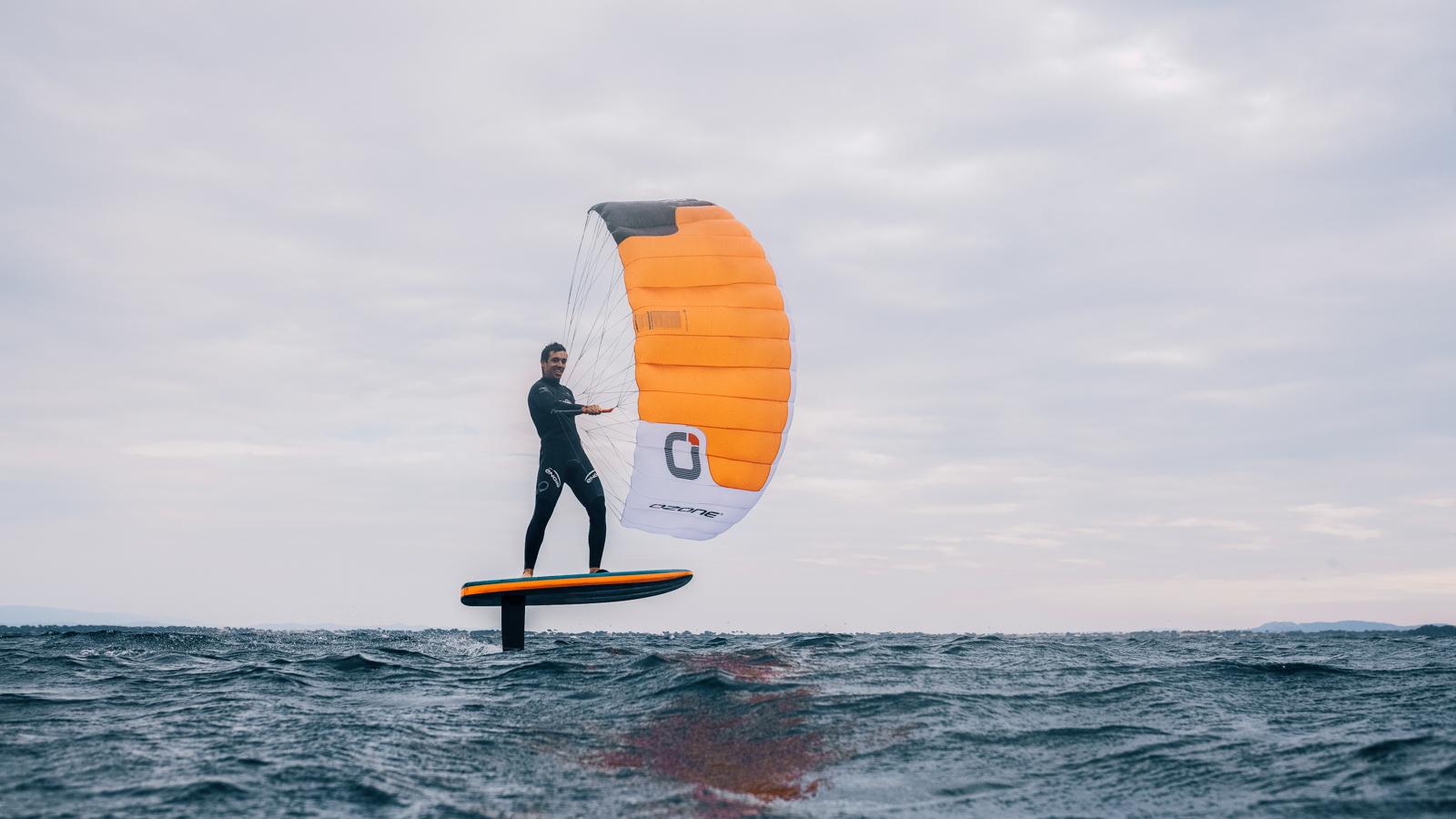
The Pocket Rocket is Ozone’s flagship parawing and the model most riders encounter first. It’s designed to be a genuinely capable all-round wing: strong upwind performance, reliable stability, and the kind of refined aerodynamics you’d expect from a paraglider manufacturer.
Available sizes: 1.9m, 2.4m, 3.0m, 3.6m, 4.3m, 5.0m
Construction: Single-skin bridled canopy, double rip-stop nylon, carbon-fibre control bar with EVA grip
Bar size: 40cm
Wind ranges (based on 80kg rider):
| Size | Wind Range (knots) | Weight | Cells |
|---|---|---|---|
| 1.9m | 30-50 | 400g | 15 |
| 2.4m | 25-45 | 450g | 15 |
| 3.0m | 18-35 | 540g | 19 |
| 3.6m | 15-30 | 590g | 19 |
| 4.3m | 12-28 | 640g | 19 |
| 5.0m | 10-25 | 700g | 19 |
Best for: All-round parawing foiling. Upwind tacking, downwind cruising, and everything in between.
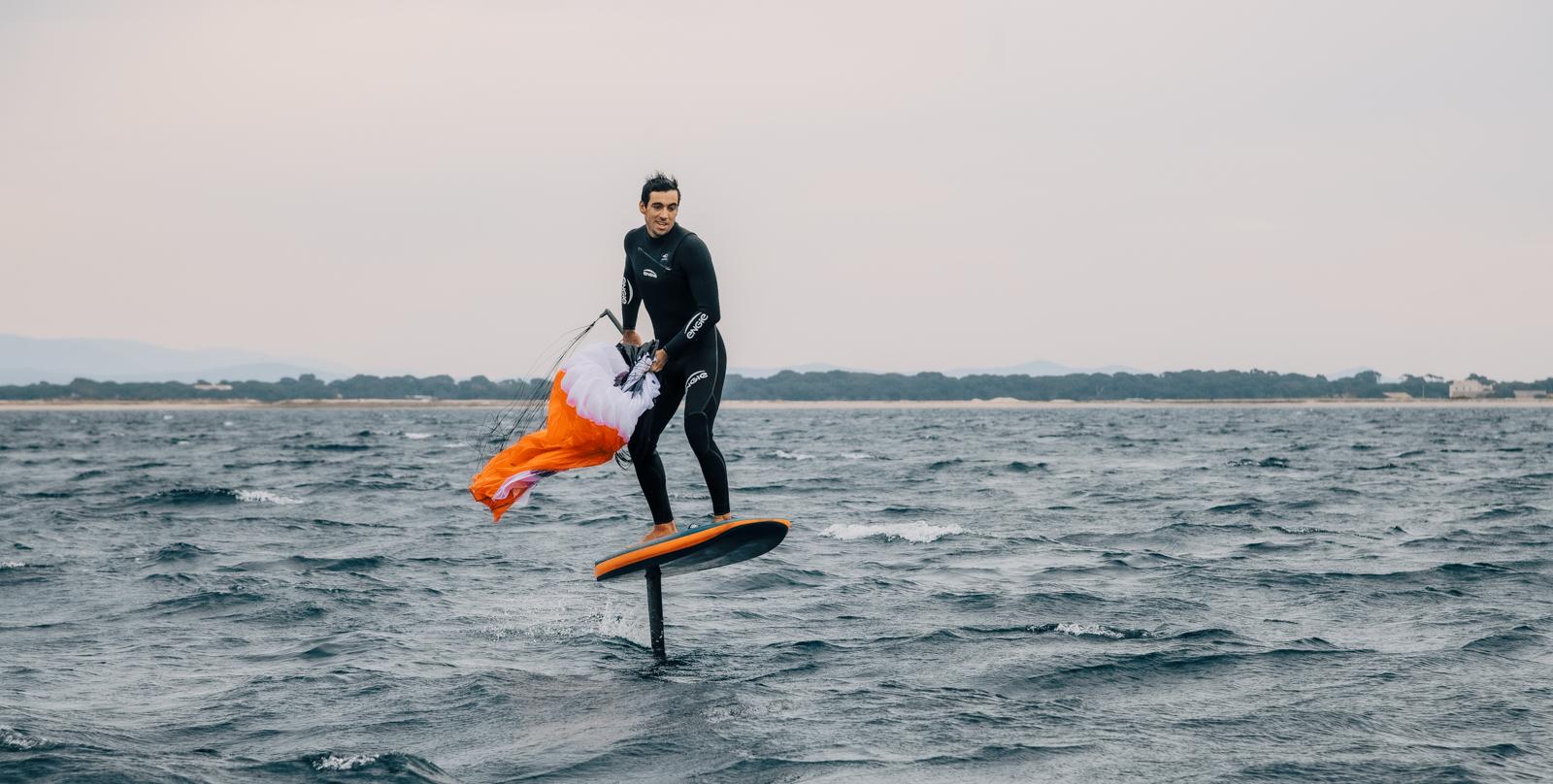
The Pocket Rocket’s defining characteristic is its upwind ability. Community feedback consistently rates it as one of the best upwind performers among all parawings currently available. Riders describe fingertip control from the bar, with the wing maintaining a clean canopy profile even when pushed hard. Ozone’s colour-coded bridle lines and spliced connections make setup and redeployment straightforward.
The 40cm carbon-fibre bar is larger than BRM’s 25cm bar, which gives more leverage for sheeting and depowering. Whether that’s an advantage depends on what you prioritise: BRM’s smaller bar contributes to a more compact pack size, while Ozone’s larger bar gives more control authority.
One point the community regularly highlights is water relaunch. Several riders note that the Pocket Rocket relaunches from the water more reliably than BRM parawings, which is a genuine confidence builder for less experienced riders.
What It Costs
The Pocket Rocket V1 sits in the premium tier on its list price, below the V2 that replaced it.
Run-out stock, and it has nearly gone. Ozone’s own price is unchanged, but Green Hat Kiteboarding are clearing the V1 at a substantial dealer discount. Re-checked 4 August 2026: only the 1.9m was still buyable, in one colourway out of eight, with every other size sold out across every colourway. On 2 August all six sizes were still listed. This is a clearance running down rather than a sale that might end, so the risk to you is the size you want having already gone.
We do not publish prices. See our guide to where to buy parawing gear to check today’s figure at a shop that will sell you one.
Why the clearance exists. Ozone listed the Pocket Rocket V2 on 1 May 2026, so this is V1 run-out stock rather than a random dealer cut, and that is worth knowing at the point you decide. The V2 is dearer in pounds; in dollars the two generations list close to level, so the V1’s remaining advantage is the clearance rather than the wing. Whether that advantage is available to you depends on the stock position above.
The Other Ozone Parawing
Ozone’s second parawing, the PowerPack, is a stash-and-glide specialist rather than an all-rounder, and it goes upwind less well. See our Ozone PowerPack review for the full picture.
Pros and Cons
Pros:
- Paraglider heritage: over 25 years of canopy design expertise
- Excellent upwind performance, among the best in class
- Reliable water relaunch, which builds confidence for newer riders
- Published wind ranges for every size, making it easier to choose the right wing
- Strong global dealer network from their paragliding and kite business
- Colour-coded bridle lines for quick, foolproof redeployment
Cons:
- Heavier than BRM equivalents (a 4.3m Pocket Rocket at 640g vs a 4.0m BRM Kanaha at 464g)
- Larger pack size than the most compact competitors
- Pricing sits at the premium end alongside BRM
Community Feedback
The Pocket Rocket has been on the market longer and has the deeper pool of rider feedback. The most consistent praise centres on upwind ability. Riders frequently describe it as the strongest upwind performer among the major parawing brands, with fingertip bar control and a canopy that stays clean and stable even in gusty conditions.
Water relaunch is another recurring positive. Several riders who’ve used both Ozone and BRM wings note that the Pocket Rocket relaunches from the water more easily, which matters when you’re learning or riding in challenging conditions.
The most common criticism is weight and pack size. BRM parawings are noticeably lighter and more compact, and riders who prioritise packability tend to note this difference. In a direct comparison on the Seabreeze forums, one rider observed that BRM “will get going easier in lighter wind due to its lower aspect ratio and lighter cloth” and “will be easier to stow when downwinding due to lighter canopy cloth.”
On pricing, the Pocket Rocket sits close to BRM territory. One Australian rider chose the Pocket Rocket 3.6 over the BRM Kanaha 4.0 partly because of availability and a lower local price, which suggests that Ozone’s broader dealer network can be a practical advantage depending on where you’re based.
Is the Pocket Rocket Worth the Price?
Ozone parawings are priced at the premium end of the market, level with BRM’s legacy single skins on list price and well above Gong’s Lowkite, which sits in the budget tier.
What you get for the premium is genuine: over 25 years of canopy design experience, excellent upwind performance, reliable water relaunch, and the security of buying from a brand with a proven global dealer and support network. Ozone also publishes detailed wind ranges for every size, which removes some of the guesswork that other brands leave you with.
The competition is strong, though. BRM offers lighter weight and more packability. Gong offers comparable performance at a lower price point. If raw upwind ability and build quality are your priorities, Ozone justifies the premium. If weight and packability matter more, BRM is worth the comparison.
How Does the Pocket Rocket Compare to BRM?
Ozone and BRM represent two different design philosophies applied to the same sport. BRM’s heritage is in ultra-lightweight foil kite design, resulting in wings that are remarkably light and compact. Ozone’s heritage is in paraglider engineering, producing wings with refined aerodynamics and wider published wind ranges.
Choose Ozone if: You want the best upwind performance, reliable water relaunch, published wind ranges to guide sizing, and the backing of a large established brand with strong dealer support.
Choose BRM if: You want the lightest, most packable wings available, the deepest model range (four models vs Ozone’s two), and the heritage of the brand that created the sport.
How Does the Pocket Rocket Compare to Gong?
Ozone and Gong sit at different price points with different strengths. Gong’s Lowkite is the accessible entry point to parawing foiling. Ozone’s Pocket Rocket is the refined performer for riders who want top-tier upwind ability and build quality.
Choose Ozone if: You want premium build quality, the best upwind performance, and a broader wind range per size. You’re willing to pay more for refined aerodynamics and a trusted brand with deep engineering heritage.
Choose Gong if: You want strong performance at a lower entry price, value straightforward purchasing from Europe, and don’t need the absolute top-tier upwind efficiency. Excellent for first-time buyers.
What Size Should You Choose?
Ozone’s wind ranges are published for an 80kg rider, so adjust accordingly. As a rough guide: if you’re in the 70 to 85kg range and ride in moderate conditions (12 to 25 knots), the 3.6m to 5.0m sizes will cover most sessions. For stronger wind or lighter riders, look at the 2.4m to 3.6m range.
Where to Buy Ozone Parawings
Ozone has a strong dealer network built over decades in the paragliding and kite industries. This is a genuine advantage: you’re unlikely to struggle finding stock or local support.
UK dealers:
- Hydrofoil Store (hydrofoilstore.com)
- Foil Shop UK (foilshop.co.uk)
- Fluid Lines (fluid-lines.co.uk)
- The Watersports Centre (thewatersportscentre.com)
- Bracklesham Board Riders (brackleshamboardriders.co.uk)
US dealers:
- MACkite Boardsports (mackiteboarding.com)
- REAL Watersports (realwatersports.com)
- Green Hat Kiteboarding (greenhatkiteboarding.com)
- Houston Kiteboarding (houstonkiteboarding.com)
EU: Available through Ozone’s European dealer network. Check ozonekites.com for your nearest stockist.
Frequently Asked Questions
Is the Ozone Pocket Rocket a good first parawing?
Yes. It is widely regarded as one of the best all-round parawings available, particularly for upwind performance, and its reliable water relaunch is a genuine advantage while you are still learning. Ozone’s heritage in paragliders and foil kites gives them a design advantage that newer entrants don’t have.
What’s the difference between the Ozone Pocket Rocket and PowerPack?
The Pocket Rocket is the all-rounder: strong upwind, versatile, suitable for all experience levels. The PowerPack is a specialist stash-and-glide wing for experienced riders doing downwind runs. The PowerPack stashes faster but doesn’t go upwind as efficiently, and Ozone don’t recommend it for learning. If you’re buying your first Ozone parawing, choose the Pocket Rocket. Our PowerPack review sets out the full comparison.
Is the Ozone Pocket Rocket better than BRM?
They’re genuinely different rather than one being objectively better. The Pocket Rocket offers superior upwind performance and easier water relaunch. BRM parawings are lighter, more packable, and come in a wider range of specialised models. The best choice depends on whether you prioritise upwind ability (Ozone) or packability (BRM).
What size Pocket Rocket should I get?
Ozone publishes wind ranges based on an 80kg rider. For a first wing in moderate conditions (12 to 25 knots), most riders in the 70 to 85kg range find the 3.6m to 5.0m covers their needs. Check our parawing size guide for a detailed breakdown by rider weight and wind strength.
The Verdict
Ozone brings something genuinely different to the parawing market. Where most parawing brands come from a water sports background, Ozone’s 25+ years of paraglider and kite engineering means their canopy design, materials, and construction are built on deep aerodynamic expertise. It shows in the Pocket Rocket’s upwind ability, which riders consistently rate as among the best available.
It handles everything from upwind tacking to downwind cruising with refined composure, which is what makes it the sensible single wing for most riders.
The trade-offs are weight and pack size. Ozone parawings are heavier and bulkier than BRM equivalents, and the pricing is firmly in the premium tier. If you want the lightest, most compact setup, BRM still leads. But if you want the best upwind performance, reliable relaunch, and the confidence of buying from one of the world’s most experienced wing manufacturers, Ozone is a compelling choice.
Head-to-Head Comparisons
- Ozone PowerPack review: the full review of Ozone’s stash-and-glide specialist
- F-One Frigate vs Ozone Pocket Rocket: premium all-rounders compared
- BRM Kanaha vs Ozone Pocket Rocket: the pioneer vs paraglider pedigree
- North Ranger vs Ozone Pocket Rocket: Depower Tab vs paraglider pedigree
- Duotone Stash vs Ozone Pocket Rocket: mainstream backing vs paraglider pedigree
Want more reviews like this?
Get notified when we publish new reviews, gear guides, and the best parawing deals.
More on Ozone
Our brand overview covers Ozone's history, full product range, and where to buy.
Read the Ozone brand overview